
By Sunil Inamdar, Vice President for Technical Development
Thin film extrusion technologies are vital to the medical device industry, enabling more advanced, customizable, and effective tools for healthcare professionals. As the demand for more sophisticated medical devices continues to grow, these technologies and the material science behind them offer crucial solutions to devices requiring specific properties such as flexibility, durability, smaller profiles, and biocompatibility.
Medical device manufacturers increasingly turn to thin film extrusion for a wide range of applications, from medical bags and balloons to barrier films. Even aerospace engineers and other industry professionals are finding new applications due to the unique properties of extruded film. Some beneficial attributes of film extrusion are listed below:
- Highly customizable: Different processes allow for a high degree of customization in films, including adjustments in thickness, finish, and color to meet specific requirements.
- Tunable material properties: Films can be soft, flexible, and strong, which are essential properties for many medical applications. This flexibility allows the films to be used in a variety of medical devices, offering both functionality and comfort where needed.
- Biocompatibility and sterilization: The materials used can be formulated to pass specific biocompatibility testing and various types of sterilization, ensuring that the films meet all regulatory and safety standards for medical use.
In this article, we’ll examine the three primary technologies behind thin film extrusion (cast, tubular film, and laminated) to understand how they work and what application they’re best used for.
1. Cast Film Extrusion
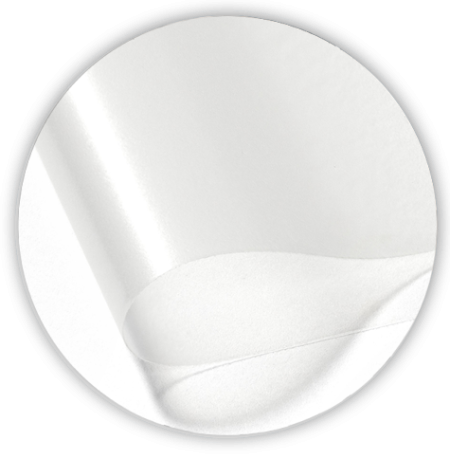
Cast film extrusion is widely used for its high degree of precision and customizable material properties, depending on the resin. Applications include:
- Cardiovascular catheter sheathes, which support procedures like ablation, cardiac catheterization, valve repair or replacement, stent placement, angioplasty, and coronary artery bypass.
- Medical bags, including colostomy bags, dialysis bags, fluid containment and management systems, pharmaceutical manufacturing enclosures, powder containment bags, and a variety of single-use pharma bags.
- Medical balloons, which are used to support various devices. Types of balloons include low-pressure catheter balloons, gastric balloons, stent deployment balloons, dilation balloons, occlusion balloons, positioning balloons, drug-eluting balloons, and counterpulsation balloons.
- Probe covers, which are designed for devices like ultrasound probes, dental probes, ophthalmology probes, and transducers/pressure monitoring.
Other cast film-based applications may require additional unique properties, such as flexibility, strength, permeability, embedded materials, or biocompatibility for implantation.
2. Tubular Film
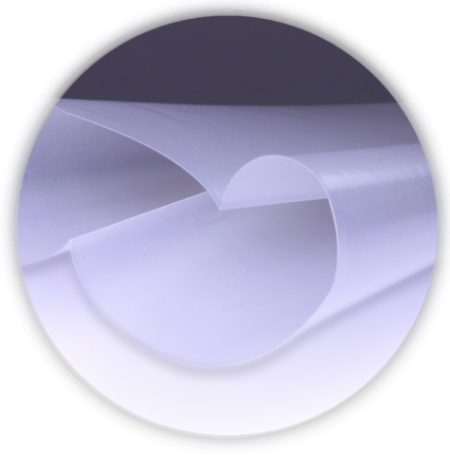
Extrusion of tubular film, commonly known as lay flat film, is a process used to produce a seamless tube of plastic film that lies flat when not in use. This method typically involves extruding molten plastic through a circular die, followed by air inflation, to expand the material into a blown tubular shape before it’s cooled and flattened.
Tubular Film Applications
The tubular shape of lay-flat film provides an effective method of creating different types of devices, including:
- Catheter sheathes and liners: The uniformity and smoothness provided by blown film are crucial to prevent irritation or infection during medical procedures.
- Probe tips and covers: The ability to cut precise lengths in lay flat film is ideal for the manufacture of covers for various medical diagnostic equipment. This includes transducers and pressure monitoring equipment, as well as ultrasound, dental, and ophthalmology probes.
3. Laminated Film
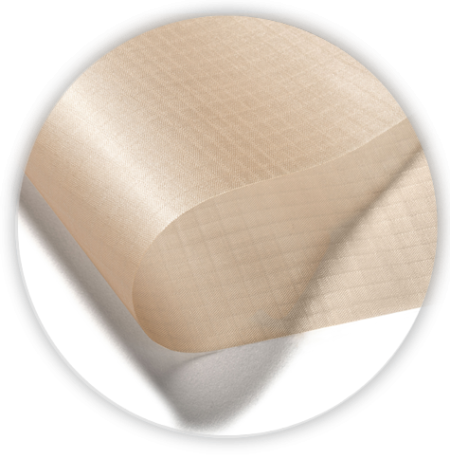
Laminated film extrusion involves combining multiple layers of materials to create films with enhanced properties. This process can use a variety of materials and different polymer types layered together using adhesives or heat to bond the layers. The resulting film benefits from the combined characteristics of each component layer such as strength, sealability, tear resistance, electrical properties, puncture resistance, and barrier properties, to name a few.
The ability to tailor the properties of the film by selecting different layers allows manufacturers to meet specific requirements that enhance the functionality and safety of the end product.
Laminated Film Applications
Due to these highly customizable properties, laminated films are used in many specialized applications:
- Catheter systems and membrane sheets: Laminated films can join multiple layers of different materials to enhance the structural integrity and functionality of these components.
- Barrier films: Films designed to create specific gas and fluid barriers are essential for products such as gas-pressurized gastric balloons.
- High-pressure systems: Laminated films are also used in high-pressure systems for both medical and industrial applications, such as balloons and bladders.
- Embedded materials: Incorporating diverse materials like meshes, fabrics, and metallic layers can enhance strength and functionality.
- Aerospace and industrial applications: Laminated films are often used in aerospace components and other industrial applications where materials must exhibit specific properties such as low gassing, high puncture resistance, and excellent gas barrier characteristics while remaining compressible and lightweight.
An All-in-one Thin Film Extrusion and Post-processing Solution
The ideal film extrusion partner has the experience and knowledge to combine material science expertise with polymer film extrusion and the in-house capabilities to cut, form, and weld films into different shapes and configurations to support a wide range of medical device and specialty applications. Capabilities that include extrusion and post-processing phases integrated into a single, streamlined approach offer manufacturers access to the following advantages:
- Quality and efficiency: With in-house post-extrusion capabilities, the ideal thin film extrusion partner can enhance efficiency and ensure product quality through reduced handling, consistency, and cleanroom conditions, reducing the chances of defects throughout the production cycle.
- Rapid prototyping and iteration: With rapid prototyping capabilities to weld and form films – as well as having a variety of readily available polymer films to select from – a reliable extrusion partner can help manufacturers develop and refine their products faster.
- Accelerated production time: By combining extrusion and immediate post-processing, the production timeline can be significantly shortened, allowing for a quicker turnaround from concept to final product.
- Supply chain simplification: This approach reduces supply chain complexity by minimizing the steps and handoffs between different production phases, decreasing the likelihood of errors and delays.
Device manufacturers should partner with a film extrusion expert that has a breadth of in-house capabilities, from material selection to scale-up. With more than 30 years’ experience in polymer experience and expertise, Polyzen can work with manufacturers to shape innovations in the medical device space and beyond by developing polymer-based films with high customizability, specific material properties, and biocompatibility.
To learn more about Polyzen’s film technology solutions, visit https://polyzen.com/product-technologies/.
About the Author
Sunil Inamdar is the Vice President of Technical Development based in Apex, NC. Sunil is responsible for identifying growth opportunities and conducting technical needs assessments throughout the product lifecycles in the Technical Materials and MedTech segments. With nearly 25 years of experience, Sunil has contributed to product development across industries such as medical devices, pharmaceuticals and biopharmaceuticals (single-use), personal protective equipment (PPE), and aerospace, bringing expertise in material formulation, R&D, processing, and manufacturing. He holds a B.E. in Polymer Engineering and an M.S. in Materials Science and Engineering from Clemson University.